Showing posts with label NIveshak Investment FUnd. Show all posts

Niveshak September 2017

Posted by Team Niveshak on Tuesday, September 19, 2017 , under , , , , , , , |


Dear Niveshak,

The winds of change are blowing here at IIM Shillong. Amidst the hustle of the placement season, 18 fellow Niveshaks are hard at work at crossing one of the most significant milestones of our existence. The Niveshak Investment Fund, NIF as it is commonly known, is set to fight it out with the big boys. NIF will soon be going live, an ambition that is finally close to becoming a reality. It is with great pride and gratitude we dedicate this significant achievement to the forbearers of our office who have set the bar high and have been instrumental in creating a hard culture and heritage of the Finance Club, the oldest and proudest club of IIM Shillong.

This month’s magazine starts with “The Month that Was” looking at the latest happening of the financial world. We weigh in on the BRICS summit which was threatened at that point due to the Doklam crisis, something for which this administration has to be commended in succeeding to come out of the confrontation smelling of roses. The cover story of this edition tries to objectively analyze an issue we seldom have had to face before: the issue of plenty. As the country’s foreign exchange reserves peaked at a staggering US$ 402.246 Billion, we look into what is the ideal amount of foreign currency assets we should be holding and what is the cost, opportunity cost and otherwise, of holding such high levels of currency. Ms. Bekxy Kuriakose, who charmed during the recently concluded Manthan, weighs in on issues mainly relating to fixed income securities and the enormous potential that it has.

The guest articles for the month are especially interesting with the article of the month taking an interesting look at decentralized IT systems and its implications for the banking and financial systems. While the FinGyaan opines about how the consolidation of the state-run banks could play out if the existing potential synergies are exploited. FinFame looks at Viral Acharya, one of the most influential men in the Indian financial industry and widely tipped to be the next RBI governor. Finally, in its second edition, Juxtapose compares and contrasts the Zimbabwean economic crisis and US Great Depression.

We hope you have as much reading the magazine as we had in making it.

Stay Invested,
Team Niveshak


(click on image or here to view)

...Read more

Niveshak July 2017

Posted by Team Niveshak on Monday, August 14, 2017 , under , , , , , |


Dear Niveshaks,

A lot has been happening around the World and in India as well. The Doklam standoff keeps everyone on their heels with India maintaining its calm and diplomacy. From the financial world, the SBI brought about a 50 basis point cut to its deposit rates which would hamper the amount of savings of the retail customers of the bank. The SEBI may ease the dispute settlement norms as requested by legal advisors and other stakeholders.

The fiscal deficit soared to 81% of FY18 target in April-June owing to an increase in the food, fertilizer, and fuel subsidy. As per the Moodys poll, India to grow at a modest 6.5-7.5% over 12-18 months before it reaches to the 8% GDP growth rate again. Infosys, TCS, Tech Mahindra see a shrink in the workforce for the first time, and the Snapdeal, Flipkart and Ola founders look at clawing back the lost ground from the investors.

The Cover Story for the month of July discusses the ‘Insolvency and Bankruptcy Code’ enacted by the Government in 2016. In the words of Arundhati Bhattacharya, Chairman, State Bank of India, “Going to the Insolvency and the bankruptcy Code would be the new normal.” This code was brought in existence to come up with a better solution to the prevalent NPA issue of the banks, safeguard their interests and the welfare of other creditors and various stakeholders. The Bankruptcy Code shall supersede all the other existing laws with regards to the issue of insolvency in the country. Keeping in mind the focus of the present Government at the ‘ease of doing business,’ this Code shall improve the ranking of India at the global level by reducing the time to sort the Insolvency issues in the country which accounts for a staggering 4.3 years to resolve presently.

The Article of the Month, ‘Universal Basic Income,’ talks about a problem quite germane to India and globally too. The idea of UBI (Universal Basic Income) stresses upon the importance of achieving social cooperation and justice as well as a robust financial system by reducing income disparities. The article further compares the UBI with the other prevalent top six welfare schemes of India, critically going through its advantages and limitations when pitted against them. It poses apposite questions of whether such schemes be implemented in India and is a fine read to the reading masses.

The FinSight and FinGyaan sections discuss of the ‘State of Economies of the World’ and ‘Tail Risk in Sub-prime Crisis’ respectively. FinGyaan deals with the problem of carrying a tail risk being acute especially in the modern financial system. It mentions of the sub-prime crises as a typical story of classic informational and distorted conflicting incentive problem among the stakeholders of the security market and underpricing of the tail risk leading to a financial disaster. The FinSight mentions of the macroeconomic scenario of the world, discussing of the slump in Oil prices, the present situation in the three major countries of South East Asia, China, India and Japan and their impact on the world economy.

In the FinaFame section, one gets to know more about Mohammad Yunus - The Man who was the visionary and developer of the one of a kind micro-credit idea, the Grameen Bank. Awardee of the Nobel Prize, the article takes the reader through the personalities life history and his achievements. The Classroom section of the July issue briefs the reader about the ‘Arbitrage Pricing Theory’ and how it helps in predicting an assets’ return using various risks attached to it.

Stay Invested!
Team Niveshak


(click on image or here to view)

...Read more

Niveshak June 2017

Posted by Team Niveshak on Saturday, July 15, 2017 , under , , , , , , , |


Dear Niveshaks,
This month has been quite an eventful one with the Prime Minister visiting and signing pacts with countries like the US and Israel which has both defense-related, bilateral trade benefits as well as economic impacts. The ongoing tussle with China and the renewed talk of make in India should boost consumption of domestically produces goods. The divestment approval for Air India serving a debt of over Rs 50,000 crore, is surviving on a taxpayer bailout. The Indian markets have been bullish, to say the least, and look all set to breach the highest tally ever. Amongst all of this, GST made the biggest impact in the month of June. The GST also addressed as the Good and Simple Tax by Mr. Modi was launched on the 31st of June and created maximum buzz by featuring the maximum number of times in the news portals, morning papers and the discussions of all and sundry.

That said, this month, we bring to you in our cover story another initiative that the present Government is likely to implement, ‘Will India make the shift to a new Financial Year.’ The article deals with a lot of potent questions and thoughts on the shift if it takes place, talks about the background of the current financial year and accounts for the pros and cons of the shift to the new financial year. The magazine team gives their opinions and suggestions on the shift while analyzing the move already implemented by the state of Madhya Pradesh in the conclusion section.

The Article of the Month raises a pertinent question, one that every Indian and Chinese resident ponders about with juxtaposed thoughts on the issue; ‘Can India replace China as a new superpower?’ A must read for the finance enthusiasts with comparisons drawn between the two countries on various topics including the GDP, population, and other macroeconomic factors. The FinSight and FinGyaan sections deal with ‘Capitalism, Inequality and Sustainable Development’ and ‘Indian Pharma – An Ambivalent Aura.’ The articles talk about inequality as a result of the widening
gap between the rich and poor as a result of capitalism and how it affects the sustainable growth of the world. The FinGyaan section deals with the Indian pharma sector; its impact on the Indian economy, GST’s influence on the pharma industry, the importance of US markets for Indian pharma division and the technological innovations in the industry.

In the FinaFame section, you get to read about Sanford I. Weill - The Man Who Invented Financial Supermarket (an institution or a company which offers a full range of financial services under one roof) that includes insurance, underwriting, stock brokerage services apart from a gamut of banking services. The Classroom section shall further your knowledge on ‘triple witching,’ an event that occurs when the contracts for stock index futures, stock index options, and stock options expire on the same day.

Have a fun time going through the various sections of the magazine. We hope you enjoy reading and give us your valuable feedback on what you expect to read in the upcoming volumes.

Stay Invested!
Team Niveshak


(click on image or here to view)

...Read more

Niveshak May 2017

Posted by Team Niveshak on Sunday, June 25, 2017 , under , , , , |


Dear Niveshaks,

This month we bring to you the most talked about Flipkart and Snapdeal merger as our cover story. The e-commerce sector in India is rapidly evolving and growing in leaps and bounds. The proliferation of many e-commerce startups from 2009 has resulted in tough competition in this sector and none of the startups have been able to witness any profits from their inception. In this light a merger has been proposed between two of major home grown e commerce players of the country – Snapdeal and Flipkart, which are funded by Soft Bank. This merger will lead to a mammoth company
which can take on Amazon - a multi billionaire funded e commerce giant in India.

Article of the month talks about how states are plagued with massive debts and what’s in stake for them. If the states continue to run their budgets in such huge debts, the economy will turn to an unsustainable one. Fin Gyaan throws some light on the concept of Universal Basic Income and its costs implications on the government, if implemented. FinSight throws light on how to revive the private investments in India.

For FinView we got the interview of Somak Gosh, Managing Partner at Contrarian Capital on the future of startup space in India. The classroom touches on the concept of “Winner’s Curse”, which is explained at length. The TMTW section covers news on the fall of Sun Pharma stocks, Implications of GST, changes to the fiscal year for MP to align it with the international standards.


Finally, we would like to thank our readers for their immense support and encouragement. You remain our prime motivating factor that keeps our spirits high and gives us the vigor and vitality to keep working hard. We hope you had a great month and wish you the best for the new one.
To end this brief note, we would like to thank our readers for their immense support and encouragement. You remain our prime motivation factor that keeps our spirits high and give us the vigor and vitality to keep working hard.

Stay Invested!
Team Niveshak


(click on image or here to view)

...Read more

Niveshak April 2017

Posted by Team Niveshak on Monday, May 8, 2017 , under , , , , , , |


Dear Niveshaks,

This month, we want to start with a thank you to all our magazine readers and content contributors for your relentless support and encouragement. The quality and number of articles we have been receiving is steadily growing and it has become a painstakingly difficult task for us to select the best of those articles. Indeed we are also happy to know that a lot of companies and their employees also follow our magazine.

The last month had been quite an eventful one for the Indian stock markets, it has seen its all-time high and the momentum still continues as I write this editorial. It’s a pleasing sight for the traders and short term investors to see the prices of a vast majority of stocks rise to such heights. It goes without saying, a low tides follows the high, Investors have to be cautious and doubly careful in case they are planning to take any fresh long positions in the current market scenario. The rise was mainly driven by the strong earnings reports from major banks like ICICI, Yes Bank, Indian Bank and the likes. Policy measures also fueled the euphoria in markets. We also witnessed merger talks of two large e-commerce players in the country – Flipkart and Snapdeal, this merger could be a turning point in the e-commerce battlefield pitting Flipkart against the Global player Amazon, as stronger competitor than before.

We have the French elections due on 7th May, has been covered in the Article of the Month. The battle is between two major contenders, Le Pen – A Protectionist leader of France’s far right political wing and Emmanuel Marcon – A former Investment banker, leading ‘En Marche!’ It will be interesting to see, if people of France will surprise the world just like people from USA did or will they choose the more liberal and well supported Investment Banker.

In this version we also publish RERA: The Real Estate Sector Finally gets a Watchdog, which touches upon the salient features of the act along with discussing what changes we can expect in the real estate sector due to this landmark act, which has been long overdue. In the FinFame you are about read about the most Successful Value Investor in the last century – Warren Buffet. His life, his principles, his investing style continue to inspire anyone who wishes to venture into the stock markets. In the Classroom, we make an attempt to explain the Modern Portfolio theory for those who are not aware of it, and to those who are already aware of it, it would be a revision.

We hope you enjoy reading our magazine and give us your valuable feedback on what you expect to read in the upcoming volumes.

Stay Invested!
Team Niveshak


(click on image or here to view)

...Read more

Niveshak March 2017

Posted by Team Niveshak on Friday, April 14, 2017 , under , , , , , , , , |


Dear Niveshak,

This month we bring to you Race for the Summit – Vod an Idea as our special coverage. The Telecom Sector of India is creating buzz after buzz in the markets of the Nation and the World of Finance. With the merger of Reliance Communications with Aircel and inception of Reliance Jio, it’s the turn of Idea and Vodafone to upsurge the thrill in the Telecom Sector of the Country with an estimated $23 billion merger between the two heavyweights of the Industry. However, even with the merger, one of
their major shortcomings will be the lack of the optical-fibre reach to the customers. Hence, how does this merger unfold for the telecom giants is yet to be seen!

The government recently launched a very ambitious Direct Tax Dispute Resolution Scheme in the budget 2016-17. However, the scheme failed miserably garnering just around Rs.1,200 crore as compared to around 2.6 lakh pending tax cases that have close to Rs.5.16 lakh crore locked in. None of the high-profile retrospective tax cases that involved firms like Vodafone & Cairn Energy opted to settle under this scheme.

Emphasizing on infrastructure development, India is also seeking a funding amounting to around $2 billion from the NDB (New Development Bank) for its infrastructure projects and has urged the multi-national bank for a faster disbursement of loans, as per a statement released by our Finance Minister, Mr. Arun Jaitley. On the magazine front, the Article of the Month talks about the revolution of impact investing in India. Impact Investing has witnessed an unprecedented rise since 2007 and is expected to continue for the times to come. However, the responsibility to drive change for social betterment cannot be left on the shoulders of the government alone. The corporate houses need to be equally responsible if we want to make an impact at the bottom of the pyramid in the coming years.

In the FinSight, the author aims to discuss one the most important question of our time, ‘Is there any alternative to the China model of growth for India?’ With the global economy going through a massive transition, the world’s eyes are set on the BRIC and MINT countries, waiting for them to emerge as the new economic superpowers. However, with China slowing down and India showing no super-normal growth as expected from it, the economists and industrialists are cogitating over and over again, as to what is in store for India after all.

In the FinGyaan section, the author talks about the harmful effects of low interest rates on an economy. The author starts by asking a few simple questions; How low is low? What is low for a mature and developed economy and what is the definition of low for an emerging economy? Then he moves on to discuss the impact of low interest rates on banks, financial institutions and markets. The classroom section talks about Purchasing Power Parity (PPP) which is an indicator of the value of currency. It will help the readers in developing a perspective by explaining the concept as well as its practical application.

Finally, we would like to thank our readers for their immense support and encouragement. You remain our prime motivating factor that keeps our spirits high and gives us the vigour and vitality to keep working hard. We hope you had a great month and wish you the best for the new one.

Stay Invested!
Team Niveshak


(click on image or here to view)

...Read more

Niveshak February 2017

Posted by Team Niveshak on Tuesday, March 14, 2017 , under , , , , , , , |


Dear Niveshak,

This month we bring to you Donald Trump – The Era of Uncertainty as our special coverage. Economy will be at the top of Trumps agenda as President and will serve as the most important barometer of his performance. His business origins and his affluent lifestyle will have a huge impact on what he perceives the country to Trump hallmarks are his unaccountability and impulsive remarks which have become his primary identification marks.

After enjoying the upshots of Demonetization for few months, Paytm recently raised another $200 million from Alibaba Group Holding and the venture capital fund SAIF Partners in order to expand its online retail business in the domestic market, which is predominantly conquered by Flipkart and Amazon. The deal is expected to value Paytm E-Commerce at close to $1 billion.

On the regulatory front, the Securities and Exchange Board of India (SEBI) plans to further tighten the regulations for algorithmic trading to minimize instances of misuse of such systems that can be used to execute complex trading strategies at a very high speed.

On the magazine front, the Article of the Month talks about the fault lines in the world economy as a whole, pondering upon various important questions such as what went so wrong that the American people, who have long championed liberalism and free markets are suddenly building walls all around? Why are the British people so eager to leave the EU? Why are so many European countries angry with the world? Why is Japan, once the hallmark of growth, striving endlessly to come out of a bruised and stagnant economic rut? And more broadly, why has the global economy and demand become so sticky that no matter how much money is pumped into it, there are no visible signs of a robust growth? Hence, the author is determined to find out the reasons why the world economy is behaving the way it is and what role does the political risk is playing in all this.

In the Finsight, the author talks about the most coveted work visa i.e. H-1B visa which is an employment based, non-immigrant visa in the United States and allows US employers to temporarily hire foreign workers in speciality occupations. However, with the recent undergoing reforms in the Trump regime, the Indian economy is expected to take a hit as India happens to be the largest recipient of H-1B visas in the world. In the FinGyaan section, the author talks about the Financial Health Clinics, which are the organizations specifically providing services to the sick industries for their revival. The main motive of these type of organizations is to provide the preventive and revival strategies which will create a safe guard to the sick industries by providing them a turnaround measures to follow for financial restructuring. The classroom section specifically talks about IPO valuation and the risks associated with an IPO. It will also help in developing a perspective as to how the valuation and done and what are the different factors that affect an IPO valuation.

Finally, we would like to thank our readers for their immense support and encouragement. You remain our prime motivating factor that keeps our spirits high and gives us the vigour and vitality to keep working hard.

We hope you had a great month and wish you the best for the new one.

Stay Invested!
Team Niveshak


(click on image or here to view)


...Read more

Niveshak January 2017

Posted by Team Niveshak on Tuesday, February 7, 2017 , under , , , , , , , |


Dear Niveshaks,

We hope that the first month of the year brought with it the spirit of starting afresh and realizing your dreams for you. This month saw Donald Trump officially coming to power as the 45th President of the United States, an event that could drastically change the way economies across the world operate with each other. The Economic Survey 2017 presented by the Finance Minister of India, Mr. Arun Jaitley, observed that the Indian Economy is still growing strong with relatively low inflation, fiscal discipline and a stable rupee-dollar exchange rate. With more currency notes being pumped in and withdrawal limits being gradually relaxed, this month also brought some relief for the cash-starved common people.

On the global front, Japan threatened to take India to the WTO, alleging that India’s restrictions over steel imports have halved Japan’s exports to our country – a step that could trigger more trade spats in the future which seems already vulnerable with high global tensions over steel and other commodities. The newly elected US President Donald Trump’s bold moves over US Visa and immigration rules also brought some turmoil for the US companies.

Our cover story for the month brings a comprehensive and exhaustive review of the Budget 2017 which was presented on February 1, throwing light on the possible implications it might have for the different sectors of our economy, while also identifying the areas that were overlooked in the budget. The Article of the Month on the Venezuelan Economic Crisis, which happens to be one of the most profound economic crises in recent history, tries to look into what led to this drastic change in fortunes for one of the star performers in Latin America. Under FinGyaan, “The Trident to Slay the NPAs” elucidates one of the most critical problems that the Indian Banking Sector is struggling with, explaining the 3 R method – Recognize, Reserve & Resolve - a modern approach adopted by the banks to deal with the problem.

Under the FinSight column, the author writes about the deregulation of Savings Bank Interest Rate – identifying is as a Slow Poison in Indian Banking sector. The FinaFame section highlights the immense contributions brought to the field of global finance by Jim O’Neill – the ex-chairman of Goldman Sachs Asset Management (GSAM). The article under FinView offers detailed insights into shares with differential voting rights, and evaluates whether or not are they a good investment opportunity; whereas Classroom for the month would educate the readers about Beta – one of the most commonly thrown terms in the field of Finance.

To end this brief note, we would like to thank our readers for their immense support and encouragement. You remain our prime motivation factor that keeps our spirits high and give us the vigour and vitality to keep working hard.

Thank you. Stay invested!
Team Niveshak


(click on image or here to view)


...Read more

Niveshak December 2016

Posted by Team Niveshak on Monday, January 9, 2017 , under , , , , |


Dear Niveshak,

Happy New Year!

The last month was mainly abuzz by the effects of demonetization seen by the Indian public. Owing to the deadline of 30th December to exchange old currency notes, the banks and ATMs across the country continued to see long queues of people. The limitations on the withdrawal from the ATMs and Bank accounts were removed post December 30.

RBI also came up with its credit policy for the year and rendered most of the key rates unchanged at 6.25%, while the CRR restrictions imposed on deposits worth Rs.3.2 lakh crore were called off from December 10. The month also saw some other interesting news like the introduction of Interest Rate Option by RBI, the fall in India’s Forex reserves for quarter ending September 2016, and the jumps in Sensex and Nifty50 as 2016 came to a close.

On the magazine front, we have covered Tata Motors for our Equity Research report. Our cover story talks about the economic blockade in the north-eastern states of Manipur & Nagaland. It tries to dig a bit into the history of the issues and how the ongoing unrest is having a financial impact as well. The article of the month talks about Abenomics in Japan and its success factors. The author has thrown light on the concept, while also trying to create a scorecard in terms of its success in various fields like economic development, labor market, etc. For FinGyaan, the author talks about how Payment banks are the future of Indian Financial System and the related pros and cons. In the FinSight section, the author has studied the possible impacts of the election of Donald Trump as the US president on various facets of global economy.

In the FinaFame section, we have looked at Dr. Manmohan Singh, the former Prime Minister of the country, as well as a well-known economist and politician. The Classroom section explains the concept of Open Interest, which essentially means the number of contracts or commitments outstanding in futures and options trading on an official exchange at any one time. For FinView, we
have brought the interview of Mr. Mitez Sheth, Global Head - Treasury & Operations at Amicorp Group and Board Member at Amicorp Community Foundation.

Finally, we would like to thank our readers for their immense support and encouragement. You remain our prime motivating factor that keeps our spirits high and gives us the vigor and vitality to keep working hard. We hope you had a great month and wish you the best for the new one.

Thank you. Stay invested!
Team Niveshak


(click on image or here to view)


...Read more

Niveshak November-2016

Posted by Team Niveshak on Sunday, December 4, 2016 , under , , , , , |


Dear Niveshak,

The month of November saw one of the major events of 2016, that is, the Prime Minister Narendra Modi’s ‘surgical strike’ on counterfeit notes and black money, which suddenly rendered 86% of the value of notes in circulation invalid. For the second time in last four decades, India was subjected to shock treatment of overnight demonetization of high value currency notes. Bank notes of Rs. 500 and Rs. 1000 denominations stopped being legal tender as a part of government’s bold move to combat black money. The move was followed by long, frustrating and anxious wait by people outside ATMs and banks across the country, to exchange the illicit currency notes. The cash crunch faced by the people in the last month is certain to have an adverse impact on their consumption spending, especially in rural areas, with the ensuing effect on the economy in the third quarter.

Another event which was in the headlines was the victory of Republican candidate Donald Trump in the US presidential elections, defeating the formidable challenger, Hillary Clinton. The month also saw some other interesting news like the disbursement of Rs.21000 crores by NABARD to farmers to assist them in the Rabi harvest, the increase in NPAs of the state run public sector banks, and the proposed income disclosure scheme under the Income Tax Act.

On the magazine front, we have covered Airtel for our Equity Research report. Our cover story talks about the historic move by the Indian government to remove the higher denomination notes from circulation and explains the implications of the move on the Indian economy. The article of the month talks about Regtech and how it is going to be the next big thing in the financial industry. The author has thrown light on the concept, while also trying to understand the impact of the technology on the banking industry in general, and Indian banking in particular.

For FinGyaan, the author talks about Artificial Intelligence and how it is transforming the Financial Services Industry in today’s world. In the FinSight section, the author has studied the upheavals going on in Indian Banking Sector and the underlying factors for them. In the newly introduced FinaFame section, we have looked at Laurence D. Fink, the founder, chairman and chief executive officer of the BlackRock. The Classroom section explains the concept of Leverage Buyout, which essentially means the acquisition of another company using borrowed capital.

For FinView, we have brought the interview of Mr. Ashish Nanda, Business Head of Banking Channel at the Kotak Mahindra Group. Mr. Nanda gives his views on demonetization and how it is going to impact the Indian banking sector and what strategy should banks adopt in the current scenario. He also touched upon various other topics like rising NPAs, strengthening of dollar against rupee, as well as role of technology in today’s world.

Finally, we would like to thank our readers for their immense support and encouragement. You remain our prime motivating factor that keeps our spirits high and gives us the vigor and vitality to keep working hard. We hope you had a great month and wish you the best for the new one.

Thank you. Stay invested!

Team Niveshak


(click on image or here to view)

...Read more

Niveshak October 2016 Issue with Page Flip version

Posted by Team Niveshak on Monday, November 7, 2016 , under , , , , |


Dear Niveshaks,

This month was mainly abuzz by the news of removal of Cyrus Mistry from Tata Sons, people’s speculations of who his successor might be; how all of it is going to affect the markets and specifically, the Tata group’s future. The hovering uncertainty did reflect on the benchmark Sensex index as well, which closed at 27,930.21, growing by only about 0.23% during the month.

The security breach that resulted in the compromise of information of over 32 lakh debit cards because of a malware installed in some of the ATMs was another hot topic of the month. Majority of these cards belonged to the banking giant State Bank of India, and its officials have said that they would be reissuing over 6 lakh debit cards. Customers across different banks were suggested to change their PINs. The breach did cause some unrest among lakhs of people who use this facility on a daily basis. Subsequently, the National Payments Council of India had to intervene and call for a forensic audit to look into the issue. The incident shows that we still have to go a long way in strengthening the security in our banking system.

Campaigns by the US Presidential candidates – Donald Trump and Hilary Clinton, and the uncertainty revolving around the possible outcome seemed to affect the market sentiments as well, as both of them have drastically opposite views on their foreign policies. The elections are scheduled to be held in the second week of November. Amidst all these uncertainties, China surprisingly brought some positivity in the global outlook, showing signs of recovery in its industrial output with better than expected growth in the Purchasing Managers Index.

On the magazine front, the Article of the Month talks about the China Housing Bubble. The author has given some really interesting insights about the topic, and has succeeded in drawing striking similarities between the current scenario in China and the conditions that had caused a crisis in some other Economies in the past. Our cover story is about the ouster of Cyrus Mistry from Tata Sons. The article talks in detail about the hunt for the potential successors, and also discusses how certain other organizations have previously gone through a leadership crisis. In the FinGyaan section, the author talks about FRTB and its impact on Risk Management, the need for banks to redesign their trading desks, and how FRTB intends to standardize market risk treatments across various sectors. FinSight talks about the buzz word these days – Financial Inclusion.

The author dwells into discussions about the background of the term, has analyzed the issues in the current banking system, and given a fair evaluation measuring the successes of initiatives taken by the government so far. In place of FinRewind, we have introduced a new section called ‘FinaFame’ under which, each month we would be bringing to light a famous personality who has had a great impact in the financial world. This month’s article talks about the ex-RBI Governor and perhaps one of the most respected men in the Indian Economy – Mr. Raghuram Rajan.

The Classroom section explains the concept of ‘Swaptions’, or Swap Options. It is an interesting capital market instrument which is essentially an option to enter into an interest rate swap or some other type of swap.

Finally, we would like to thank our readers for their immense support and encouragement. You remain our prime motivating factor that keeps our spirits high and gives us the vigour and vitality to keep working hard. We hope you had a great month and wish you the best for the new one.

Thank you. Stay invested!

Team Niveshak


(click on image or here to view)


...Read more

Niveshak September 2016 Issue with Page Flip version

Posted by Team Niveshak on Sunday, October 9, 2016 , under , , , , |


Dear Niveshaks,

The month of September saw the benchmark Sensex falling 557 points or 1.96%
from the start of the month. The month did not see any major economic events or
policy announcements by the government. The most talked about topic this month
was the new RBI governor who would replace Dr. Raghuram Rajan.
This month also the news came that the country’s GDP grew by 7.1% in the first
quarter of this fiscal year. This reaffirmed the India’s position as the fastest growing
major-economy in the world. Also on the governance front, there was some good
news. Our Babu-led bureaucracy has finally energised themselves and has started
competing among themselves to get the status best performing states. Many states have also hired big consulting firms to help them understand the process of evaluation and find ways to improve their rankings. On policy-front the government is taking its initiative further and is giving major boost to the Unified Payment Interface (UPI). There was also one initiative that could be the first of the million steps needed
to revive the financially-drain Indian Railways (IR). The IR has started the dynamic surge-pricing for ticket booking for some of its premium trains.

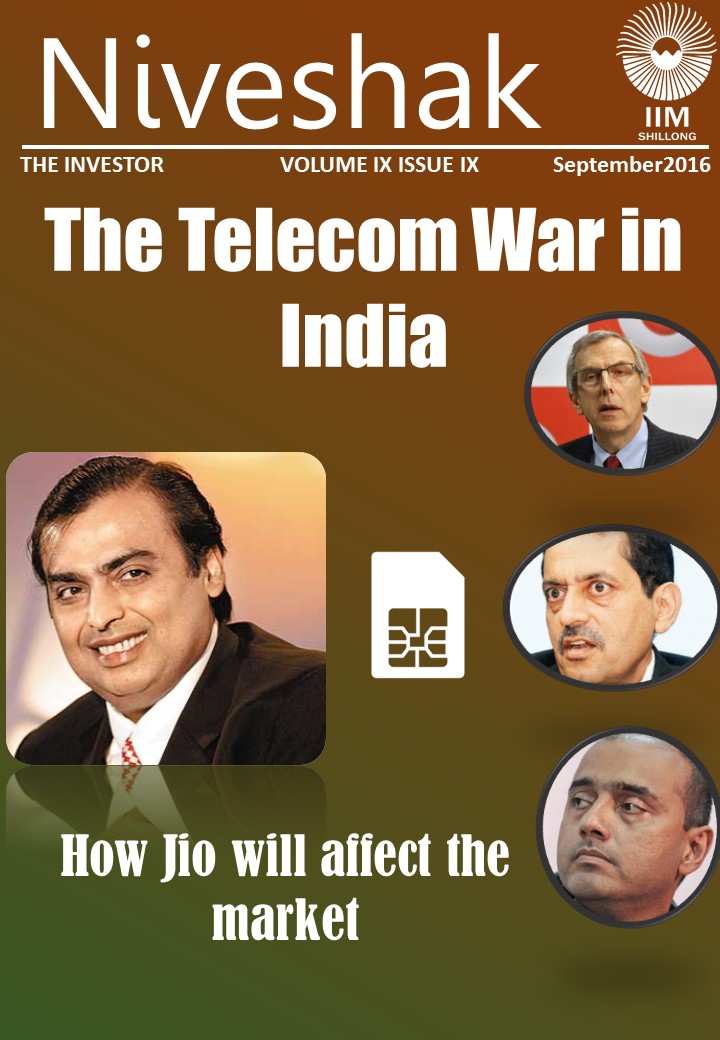
On magazine front, this month we have covered HUL for our Equity Research Report. HUL being a behemoth FMCG company provides a wide view of the Indian rural sector economy also. Article of the month talks about talks about the Unified Payment Interface (UPI). The author talks about why how the UPI is different from Payment Wallet system and who it is another step to make a cashless society. Our cover story talks about the Telecom battle which has started with the launch of Jio at rock-bottom price. On the FinGyaan, the author gives views on the GST and how it could help in removing the parallel economy running in the country. FinRewind section talks about the WorldCom Scandal in the year 2002. While for FinSight we have a topic on the robust BRICS economy. The author illustrates how these five nations
could be the engine of growth for the world economy. On Classroom this time we are explain the concept on Margin Trading.
For FinView, this time we have brought the interview of Mr. Tapan Singhel, MD & CEO of Bajaj Allianz. He gives his views on investment philosophy, how we can convert the insurance industry into a pull-based selling model and how IoT can add value to the Insurance industry.
Finally, we would like to thank our readers for their immense support and
encourage¬ment. You remain our prime motivation factor that keeps our spirits high
and gives us the vigour and vitality to keep working hard. We hope you had a great
financial year and wish you the best for the new one

Thank you. Stay invested!

Team Niveshak


(click on image or here to view)


...Read more

Niveshak August 2016 Issue with Page Flip version

Posted by Team Niveshak on Tuesday, September 6, 2016 , under , , , , , |


Dear Niveshaks,

We welcome you to our eighth anniversary issue. What was started as a small initiative to keep abreast the readers about the finance and economic issues, has now grown into a full-fledged magazine with different sections, articles, contests, interviews and lots more. All of this has been possible only because of your continued support which has been the fuel for us to continuously try to exceed your expectations.

In the run up to the anniversary issue, we organised our anniversary issue contest
Celebratio. This time we had two different task. Firstly we invited a model to select stocks based on the principle of Value Investing and for the second task we gave country-specific industry topics and invited the views on those topics. We are very enthusiastic from the huge response from our readers. It was a herculean task for us to select the winner. It would be unfair on our part if we did not thank all the participants who showed their enthusiasm for the events. You could find the top three
industry analysis in this issue.

From this anniversary issue, we have tried to set the standards high and have introduced a new section in our magazine – Equity Research Report. From now onwards, each month we will select a stock and would publish an ER Report. We hope that it would add to your knowledge. This time, we have brought to you the views of Mr. Rajendra Kalur, Director & Chief Executive Officer, TrustPlutus Wealth Managers (India) Private Limited and Mr. Jay Shah, founder of Ventureforth and President Star Advisory Services, LLC. They gave their views on wealth management and raising capital.

Talking about the month, the benchmark Sensex ended with around 1.5% higher than the start of the month. Also the month made some of the important news that would have long-term implication for the Indian economy. One of the most important event for the month was the announcement of the new governor of RBI Mr. Urjit Patel who would replace Mr. Raghuram Rajan when his term ends in September. Mr. Patel is the former deputy of the RBI and brings with him vast experience in the field of banking and economy. Other important event was the introduction of a bill in the parliament that would fast-track the debt recovery process. It is important in the respect that it would fasten the process of debt clearance for the banks.

Finally, all of this would not have been possible without your support and enthusiasm. You are our prime motivators and we continue to look up to you. Though we have come so far, but we would not become complacent and would try to continue to provide you with the stimulating ideas and opinions. We hope you had a great month and wish you the best for the new one.


Thank you. Stay invested!

Team Niveshak


(click on image or here to view)


...Read more

Niveshak July 2016 Issue with Page Flip version

Posted by Team Niveshak on Tuesday, August 9, 2016 , under , , , , , |


Dear Niveshaks,

The month made news mainly centred around the monsoon and the GST Bill. The
benchmark Sensex index showed optimism for the month with the index up by
around 2.92% during the month.

The Indian monsoon and the GST Bill attracted the maximum eyeballs in the month
of July. The benchmark Sensex index showed optimism for the month with the index up by around 2.92%.

The two most discussed issues for the month for the Indian economy were the prospect of good monsoon and the push by the government to pass the GST Bill. As has been predicted by the IMD, India would have above normal monsoon after a gap of two years. This is a very important factor for a country heavily dependent on the rainfall for the agriculture sector. Also, one of the most awaited reforms in the Indian economy, the GST Bill, is all set to come into force. The Rajya Sabha has finally cleared the bill after struggling to form a consensus over it for years. Also some of the other events that made news this month was India tryig to host G20 summit in 2018 rather than the scheduled 2019, and some news in FMCG sector where the companies like Dabur and HUL are venturing into new sectors.

On the magazine front this time, July’s article of the month talks about the bankruptcy code. The author asserts the importance of bankruptcy code in making the system more resilient. Our cover story is on the Trans-Pacific Partnership among the nations. The article talks about the recent development where the nations have signed a deal on the final proposal, though it is yet to be ratified. The article focuses on how
it would affect India. In the FinGyaan section, the author talks about the GST Bill and its effects on the Indian economy. The author talks about what benefits India could derive through the implementation of the bill and how it could be a panacea for the Indian economy. The FinRewind section covers the Enron scandal which had rocked the financial world. The author describes the event and provides his insight as to how this scandal made financial systems more robust. FinSight talks about the financial technology companies and their dynamics with the banks. The author supports the perspective that the banks should view the tech firms more as a partner in their growth journey rather than a parallel competing industry. This is based on the
paradigm shift being observed in the way people bank, with major functionalities being transformed for the mobile platform. This time we have brought to you an article on Personal Finance authored by Mr. P. Saravanan, Associate Professor of IIM Shillong, and published in Financial Express. The articles talks about how one should do Industry Analysis.The Classroom section explains the concept of ‘The Big Mac Index’. It is one of the popular indices to measure the purchasing power parity of nations.
Finally, we would like to thank our readers for their immense support and encouragement. You remain our prime motivating factor that keeps our spirits high and gives us the vigour and vitality to keep working hard. We hope you had a great month and wish you the best for the new one.

Thank you. Stay invested!
Team Niveshak

(click on image or here to view)

...Read more

Niveshak June 2016 Issue with Page Flip version

Posted by Team Niveshak on Saturday, July 2, 2016 , under , , , , , , |


Dear Niveshaks,

The month of June saw two major events, the first one being domestic and other being a global one, both of which will have a far-reaching effect in the coming quarters. While the benchmark Sensex index ended the month at approximately the same level at which it started, there was huge volatility mainly on account of these events.

The first big surprise to shake the market took place when the RBI Governor, Raghuram Rajan wrote an open letter to the employees of the RBI about his plan to exit when his term ends. The main cause of the concern was the timing of the change in governorship when the global economy is facing strong headwinds.

Another event with global repercussion was the Brexit. The ‘Leave’ camp having won the vote meant that the UK would have to leave the European Union. The stock markets plummeted across the globe with Sensex opening around 1000 points down the next day. Since India has strong economic ties with the United Kingdom and many companies earn in the Euro, the market tumbled.

The month also saw some other interesting news like Railways making its front line staff more customer friendly and e-commerce company Flipkart reducing its return day policy from 30 days to 10 days for most of the products it sales.

On magazine front this time, the article of the month talks about the GST since the bill has been passed by the Lok Sabha and awaits its approval from the Rajya Sabha. The article provides a holistic view of the bill. Our cover story talks about the historic vote of Brexit and explains what the implications are and what led to such a situation. For FinGyaan, the author talks about how financial system can be integrated with the sustainable development. It brings in different perspectives which can help us reach this goal.

Our FinRewind section talks about the Dot-com bubble burst. The author analyses the event and charts out the lesson that can be learnt from this. And the Fin-Sight section explains Islamic Development Bank. The author explains its financing instruments and the key features of the bank and its implication for India.

This time we have brought the expert interview of Mr. Rakesh Kumar Verma, Chief Financial Officer of JNU, IAAS. He gives a detailed explanation on the expenditure of the government on the education sector and how it is ensured that the money is used for the intended purpose. He also talks about how the funds are allocated to the educational institutions.
fund management.

Finally, we would like to thank our readers for their immense support and encouragement. You remain the prime motivation factor that keeps our spirits high and gives us the vigour and vitality to keep working hard. We hope you had a great month and wish you the best for the new one.

Thank you. Stay invested!
Team Niveshak

(click on image or here to view)

...Read more

Niveshak May 2016 Issue with Page Flip version

Posted by Team Niveshak on Wednesday, June 15, 2016 , under , , , , |


Dear Niveshaks,

The month saw government taking some small but important steps to improve the ease of doing business. The benchmark Sensex also remained range bound with the index showing uptrend only in the last days of the week.

During the month, the government took some decision which will have far-reaching impact to simplify the business process in the country. For example, to make export clearance easy and effort-less in its unprecedented move the government has opened a new window which will provide clearance in one day. Now the government has set big targets to achieve, it has also directed Niti Aayog to set up monthly targets for all the departments. This will boost implementation. Also in its attempt to curb black money the government is trying out measures to ensure cashless transaction more frequent. Measures have been identified like installing more POSs and offering first five internet transaction free. If successful, the measures will significantly help in curbing the black
money.

On magazine front this time, article of the month talks about the negative interest rate and how it could impact Indian economy. The article points out the prolonged use of the negative interest rate might lead to price war among countries. Also with the probable collapse of the Eurozone, if the Britain leaves the group, there are chances that the central banks will continue the negative interest rate. Our cover story talks about the telecom sector and the impact it has on the Indian economy, how the sector has evolved and with the 4G coming to the country the sector in entering into the
next phase of growth. For FinGyaan, the author talks about one of the important issue currently plaguing the banking industry i.e. the burgeoning NPA. The author points out the hindrances banks are facing in clearing the NPA. Our FinRewind section talks about the currency crisis which had hit the Russian economy at the end of the 19th century. And the FinSight section delves into the banking industry of the country and how we can make it more accessible to all.

This time we have brought the expert views of Mr. Pradeep Dhamdhere, Fund Manager, Equity & Senior Analyst, Bajaj Allianz Life Insurance Co. Ltd. He gives his views on portfolio and fund management. Specifically, he talks about various parameters that one could consider in constructing a portfolio, what are the general regulations one has to company with when managing a professional portfolio vis-à-vis a personal portfolio and how investor should protect oneself from the volatility. He also advices on the specific skill sets a young professional need to develop for building a career in
fund management.

Finally, we would like to thank our readers for their immense support and encouragement. You remain our prime motivation factor that keeps our spirits high and gives us the vigour and vitality to keep working hard. We hope you had a great financial year and wish you the best for the new one.

Thank you. Stay invested!

Team Niveshak

(click on image or here to view)


...Read more

Niveshak April 2016 Issue with Page Flip version

Posted by Team Niveshak on Wednesday, May 11, 2016 , under , , , , |


Dear Niveshaks,

Welcome to the FY17. The month created a lot of news but nothing much significant.With the world market and economy relatively stable, the benchmark Sensex rose by1.19% during the month.

There was one important move by the RBI which will have significant impact in the banking industry and it was the applicability of MCLR from April 1st, 2016. The move is aimed to reflect changes in the borrowing rate for the retail consumers whenever RBI changes its policy rate.


Also there are chances that after 2 years of drought, the country will have a normal monsoon. This is essential for a country like India where a large number of farmers are dependent on rain for irrigation.

The month also saw some moves by the government in the aviation sector. After Civil Aviation Policy is implemented, private players would be able to claim subsidy for regional routes. Also government has eased rules for local airlines to fly abroad. On Magazine front, our article of the month talks about the fall in the economy of Japan. It also analyses the important aspects of the Abeconomics and what went wrong. The article cautions the European economy to learn from the Japanese economy. The cover story analyses the journey of the Insurance sector in India and what are the different channels that have been adopted by the insurance companies. For FinGyaan, the author explains how weather derivatives instrument can be used to protect against possible fallout of the weather. The article explains how the pricing is done and the prospects for weather derivate instrument in India. Our FinRewind section has picked a yet another important event in the Indian economy history, which is LPG (Liberalisation, Privatisation and Globalisation) in India. The author illustrates what led to the decision of opening up of the economy and tries to answer whether we are better off or not. Finally FinSight section talks about the rising gap between the rich and the poor. This time we have an interview of Mr. Nimesh Manger, Regional Head, Agri Business, Gujarat at Ratnakar Bank. He talks about why financial sector has maintained a distance from the agriculture industry and what are the potential areas where there is huge opportunities for the industry to tap the market. The Classroom section explains the concept of Money Market Hedge. It is a simple technique which is used by traders and other players to hedge against the foreign exchange risk.

Finally, we would like to thank our readers for their immense support and encouragement. You remain our prime motivation factor that keeps our spirits high and gives us the vigour and vitality to keep working hard. We hope you had a great financial year and wish you the best for the new one.

Thank you. Stay invested!

Team Niveshak

(click on image or here to view)


...Read more

Niveshak March 2016 Issue with Page Flip version

Posted by Team Niveshak on Friday, April 1, 2016 , under , , , , |


Dear Niveshaks,

We welcome you to our last issue for this fiscal year. The month had a lot of buzz after Finance Minister Arun Jaitley presented the Budget on the last day of the previous month.

After trading downward in the month of February, Sensex showed an upward trend in March, buoyed by strict fiscal consolidation measures announced by Mr. Jaitley in the budget. The month also saw some big moves on the policy front such as the statutory backing of Aadhar Bill and stern actions by lenders to recover dues from loan-defaulters.

Moreover, the statistics ministry is contemplating on including online purchase in CPI calculation, which is a very pragmatic move and shows proactiveness on the part of the government. On the global front, the Federal Reserve clarified that they would not go as per the pre-set plan of the rate hike and would only raise the rate two times in a year.

Our Article of the Month article identifies that it is the perfect time for India to catapult its growth engine given the slowdown in the Chinese economy. The author discusses as to why the Chinese Slowdown is “India’s Big Break”. The cover story analyses the Budget and focuses on the specific sectors through which Mr Jaitley plans to transform India. The author concludes that only time will tell whether the government is able to fulfil all its proposals in the Budget or not. For FinGyaan, the article identifies the issue on non-performing assets which is plaguing the Indian Banking industry and also suggests some measures which can be used to improve the situation. Our FinRewind section brings to you the story behind Black Monday of 1987. Here, the author outlines the incident, its reasons and the new regulations that were put in place after the massive crash of the stock market. FinSight deliberates on financial inclusion and the author acknowledges that though financial inclusion is the next big thing in India, there are many roadblocks.

This time we have an interview with Mr. Manish Dugar, Chief Financial Officer at InMobi. He talks about the advantages of having a company being operated from different nations, valuation of a start-up and how a start-up can best raise funds. Classroom explains the concept of Carry Trade, a strategy whereby an investor borrows money at a cheap rate and invests in some security or asset that is likely to provide a higher rate of return.

Finally, we would like to thank our readers for their immense support and encouragement. You remain our prime motivation factor that keeps our spirits high and gives us the vigour and vitality to keep working hard. We hope you had a great financial year and wish you the best for the new one. Keep it pouring in.

Thank you. Stay invested!

Team Niveshak

(click on image or here to view)


...Read more

Niveshak February 2016 Issue with Page Flip version

Posted by Team Niveshak on Tuesday, March 1, 2016 , under , , , , |


Dear Niveshaks,

The month of February has generated lots of news in the financial world. The BSE Index Sensex remained below 25,000 mark for the whole month and we also saw big fall on some days mainly due to global cues.

The month started with the good news regarding rise in Manufacturing PMI for January which was noted as 51.1 compared to 49.1 for December. Also we saw IT behemoth Infosys announcing that it will build world’s tallest tower clock tower. The decision regarding net neutrality by TRAI clarified the confusion where TRAI did not allow for differential pricing. Also the announcements by Apple that it will set up tech centre in India added gold to the India’s IT glory.

The month ended with the three most important financial events of the year. Railway budget sought to explore innovative sources of financing, Economic Survey focussed more on the external factors and it forecasted unusually large range of 7 – 7.75% of GDP growth rate for FY17 and the Union Budget also stressed on the turmoil in the external sectors and renewed focus on rural sector.

On magazine front, our cover story is about how Alphabet got its valuation and how start-ups are getting so high valuations in spite of running in losses. The Article of Month describes about the shoddy practices that a Pharma company followed and earned millions. The story shows how a company which is highly valued would be following a shady business model. FinGyaan section of the magazine talks about the boundless opportunities that India possess and shows that much can be done. For Fin-Rewind section we have chosen a topic which explains how OPEC created a financial funding option and what impact it has on the world’s economy. FinSight explains about the behavioural aspects of finance and focuses on how human behaviour affect the financial decision. The Classroom section explains about LIBOR and what is the method of arriving at LIBOR and
some other aspects.

This time we bring you interview from Vivek Agarwal, MD of MTECH INFORMATIC LTD. He talks about Indian IT hardware industry, HR policies, the impact of Land Bill and the measures that should be taken for successful implementation of Start-up India.

To end this brief note, it’s important that we thank you, our readers, for your constant support and appreciation. Please continue to motivate us so that we can come out with more insightful reads in the issues to come. Keep it pouring in.

Thank you. Stay invested!

Team Niveshak

(click on image or here to view)


...Read more

Niveshak January 2016 Issue with Page Flip version

Posted by Team Niveshak on Monday, February 1, 2016 , under , , , , |


Dear Niveshaks,

A very Happy New Year. We welcome you to our first issue for this year. The month saw many ups and downs in the market. The Sensex started on a good note but that did not continue for the month. Crashing below the 24,000 marks, the Sensex finally recovered and ended by falling 1,320 points from the start. The volatility was mainly due to the external factors.

The month also saw reports by two major institutions pegging India’s growth on a rising path. Both World Bank and IMF said that India will be the fastest growing major economy in the world. They praised India for the reforms initiated by the government but cautioned that the World growth will also be affected by the slowing growth in the major developing economies of the world.
The IIP number released in the month showed contraction in the industrial production mainly led by the manufacturing sector. While CPI number shot up. Both these led to the dampening of sentiment among the investor community as they saw little prospect for the Rate-cut by the Rbi.

On a global front, falling Chinese economy continued to make headlines as the experts see more fall in the coming months. Oil is not showing any sign of revival. And to encourage more lending by banks, Bank of Japan has introduced negative interest rate. The rate will be charged on the incremental deposit that the banks will make to the central banks. The move will benefit emerging economies like India, where the cheap money will find its way for better returns. Also the stock market in India zoomed up on the day of announcement.

On the magazine front, our cover story is regarding the fall in the oil prices. Crashing from the highs of around $125 a barrel to $30 a barrel, the story shows how it is boon for some and bane for others. Article of the Month talks about the Masala Bond. Though little heard of about this type of bond, this is nothing but the issuing of foreign bonds in Indian rupees. The term got its due publicity after the Indian Railways decided to raise funds through this mechanism. FinGyaan section of the magazine talks about the Indian Banks and how they are in deep debt. The rising NPAs, especially of Public Sector Banks is a major cause of concern and the article talks about the issue. The newly introduced Fin Rewind section talks about the Energy Crisis of 1970s. The article takes a holistic view and see the situation from geo-political angle as well.

FinSight talks about the effect of the fall of commodity prices on India. The Classroom section gives the reader knowledge about the Exchange Traded Fund. FinView has the interview from Dr. S. Jayprakash, Co-Founder & Vice President of Nanobi Data and Analytics Pvt. Ltd. He talks about the insurance industry and how data-analytics can be used to catapult the insurance industry given the insurance market is still an untapped market in India.

To end this brief note, it’s important that we thank you, our readers, for your constant support and appreciation. Please continue to motivate us so that we can come out with more insightful reads in the issues to come. Keep it pouring in.

Thank you. Stay invested!

Team Niveshak

(click on image or here to view)


...Read more

. Powered by Blogger.